1. What Are Monel Alloys?
Monel alloys are a group of nickel-copper (Ni-Cu) alloys known for their exceptional corrosion resistance, particularly in marine and chemical environments.
Typical composition:
- Nickel (Ni): ~60–70%
- Copper (Cu): ~20–30%
Key advantages include:
- Excellent resistance to seawater and saltwater
- Strong resistance to chloride-induced stress corrosion cracking (SCC)
- Outstanding performance in reducing acids (such as hydrofluoric acid)
Compared to stainless steel, Monel offers superior corrosion resistance.
Compared to Inconel, Monel focuses more on corrosion resistance rather than high-temperature strength.
2. Overview of Common Monel Grades
| Grade | UNS | Type | Key Features | Applications |
|---|---|---|---|---|
| Monel 400 | N04400 | Solid solution | Excellent corrosion resistance | Marine, chemical |
| Monel K500 | N05500 | Precipitation hardening | High strength + corrosion resistance | Oil & gas |
| Monel R405 | N04405 | Free-machining | Improved machinability | Precision parts |
3. Detailed Grade Breakdown
1) Monel 400 (UNS N04400)
Type: Solid solution strengthened alloy
Key advantages:
- Excellent seawater corrosion resistance
- Resistant to chloride SCC
- Good weldability
Applications:
- Marine pumps and valves
- Heat exchangers
- Shipbuilding components
2) Monel K-500 (UNS N05500)
Type: Precipitation-hardened (Al + Ti)
Key advantages:
- 2–3× higher strength than Monel 400
- Maintains corrosion resistance
- Excellent fatigue resistance
Applications:
- Offshore fasteners
- Oil drilling tools
- Pump shafts and springs
3) Monel R-405 (UNS N04405)
Type: Free-machining grade
Key advantages:
- Improved machinability (with sulfur addition)
- Maintains corrosion performance similar to Monel 400
Applications:
- Automatic machining parts
- Precision components
4. Chemical Composition Comparison (%)
| Grade | Ni | Cu | Fe | Mn | Al | Ti | C |
|---|---|---|---|---|---|---|---|
| 400 | ≥63 | 28–34 | ≤2.5 | ≤2.0 | — | — | ≤0.30 |
| K500 | ≥63 | 27–33 | ≤2.0 | ≤1.5 | 2.3–3.15 | 0.35–0.85 | ≤0.25 |
| R405 | ≥63 | 28–34 | ≤2.5 | ≤2.0 | — | — | ≤0.30 |
5. Mechanical Properties Comparison
| Grade | Tensile Strength (MPa) | Yield Strength (MPa) | Elongation (%) | Feature |
|---|---|---|---|---|
| 400 | ≥550 | ≥240 | ≥30 | High ductility |
| K500 | ≥900 | ≥600 | ≥20 | High strength |
| R405 | ≥550 | ≥240 | ≥30 | Easy machining |
6. Monel vs Inconel
| Property | Monel | Inconel |
|---|---|---|
| Base | Ni-Cu | Ni-Cr |
| Strength | Moderate | High |
| Corrosion resistance | Excellent | Excellent |
| High-temperature performance | Moderate | Excellent |
👉 Simple comparison:
- Monel = corrosion specialist
- Inconel = high-temperature specialist
7. Typical Applications
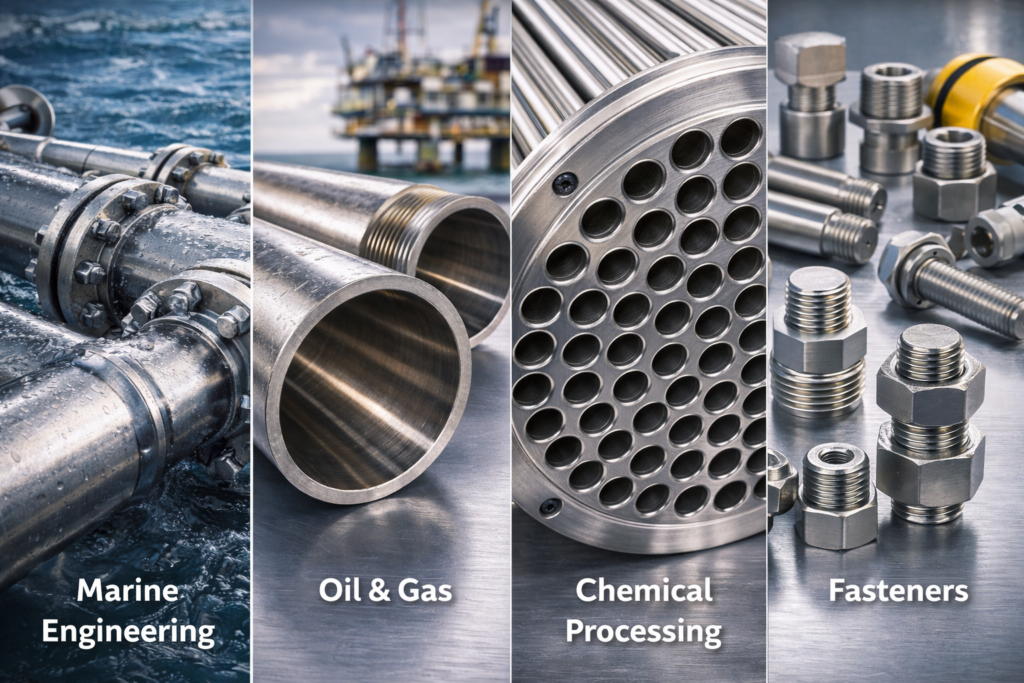
Monel alloys are widely used in:
- 🌊 Marine engineering (seawater systems, ship components)
- 🛢️ Oil & gas (downhole tools, offshore equipment)
- ⚗️ Chemical processing (heat exchangers, reactors)
- 🔩 Fasteners (corrosion-resistant bolts)
- ⚙️ Precision machined components
8. Available Product Forms
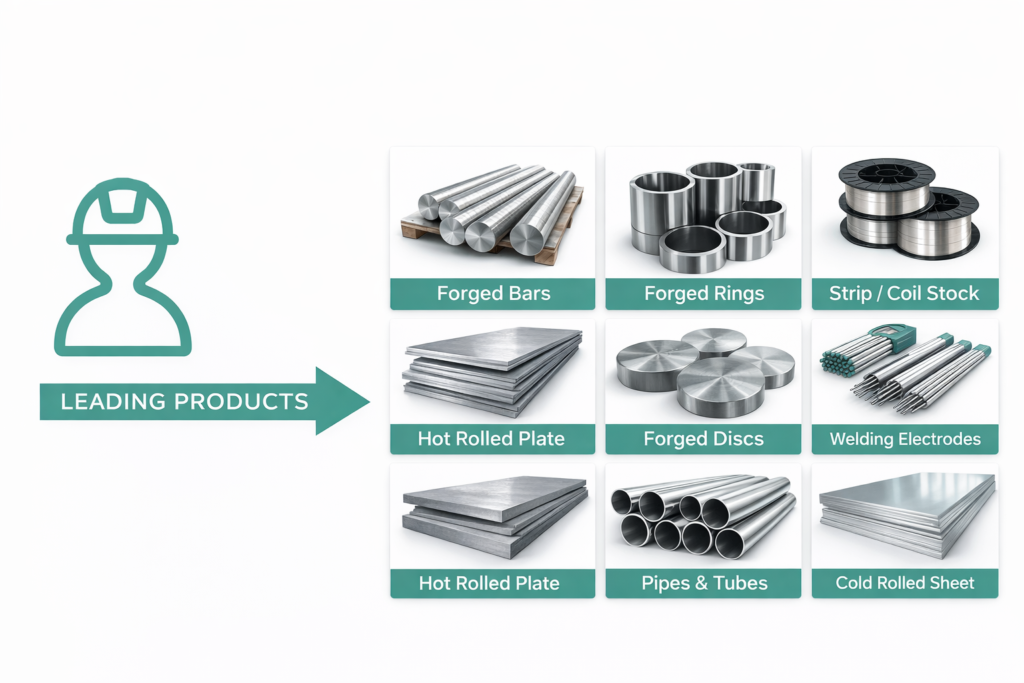
We can supply Monel alloys in:
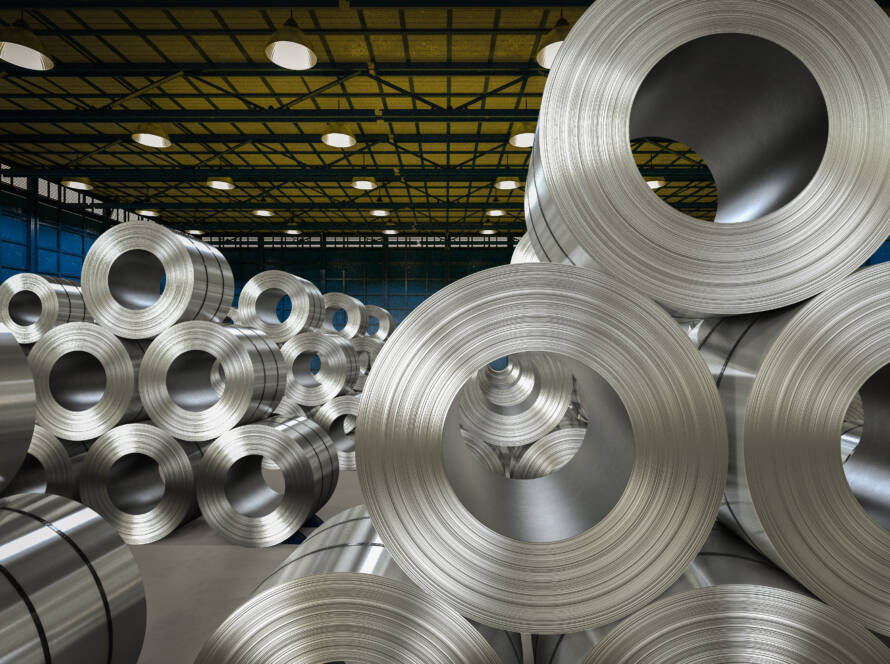
- Sheets / Plates / Strips
- Bars (Round / Flat)
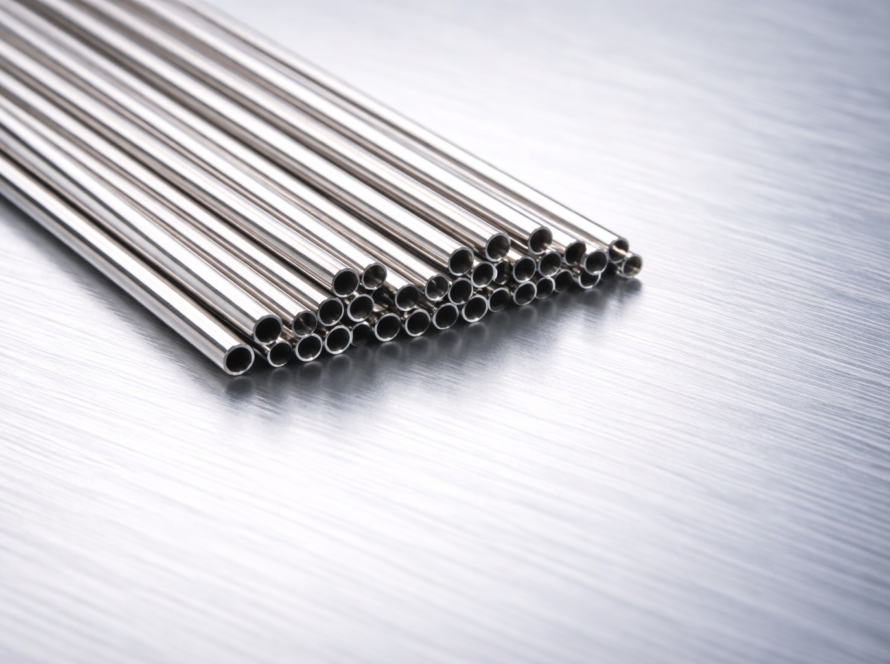
- Pipes & Tubes
- Fasteners
- Forgings
- Machined Parts
9. Material Selection Guide
1) For seawater environments
→ Choose Monel 400 / K500
2) For high strength
→ Choose Monel K500
3) For machining parts
→ Choose Monel R405
10. Quality Assurance
- Prime raw materials
- EN 10204 3.1 MTC
- PMI testing available
- Third-party inspection (SGS / BV / TUV)
- Custom processing (cutting, machining)
- Export-grade packaging
11. Conclusion
Monel alloys provide a reliable solution for marine and highly corrosive environments, where corrosion resistance is more critical than high-temperature strength.
Choosing the right grade can significantly improve durability and reduce maintenance costs.