Wear-resistant steel—often called wear plate, abrasion-resistant steel, or AR steel—is a high-strength, high-hardness material designed to withstand severe abrasion, impact, and sliding wear.
It is widely used in heavy-duty equipment such as mining machinery, construction machines, dump truck bodies, crushers, and industrial handling systems.
This guide explains what wear-resistant steel is, how it is made, common grades, key properties, and the industries where it is most used.
1. What Is Wear-Resistant Steel?
Wear-resistant steel is a quenched and tempered (Q&T) steel designed to offer:
- High hardness (typically 360–600 HBW)
- Good toughness
- Strong abrasion resistance
- Long service life under harsh working conditions
It is manufactured using alloying elements such as:
- Carbon (C) – increases hardness
- Manganese (Mn) – improves strength
- Chromium (Cr) – enhances wear resistance
- Boron (B) – improves hardenability
This makes the material extremely durable against friction, sliding, and impact.
2. How Wear-Resistant Steel Is Made
Wear-resistant steel plates are produced through the following process:
1) Steelmaking (adjusting alloy composition)
2) Hot rolling into plate
3) Quenching – rapid cooling to increase hardness and strength
4) Tempering – reduces brittleness and improves toughness
The result is a plate with:
- High surface hardness
- Good impact resistance
- Stable mechanical properties throughout the thickness
3. Common Wear-Resistant Steel Grades
Wear-resistant steel comes in several popular international standards.
China (NM Series)
- NM400
- NM450
- NM500
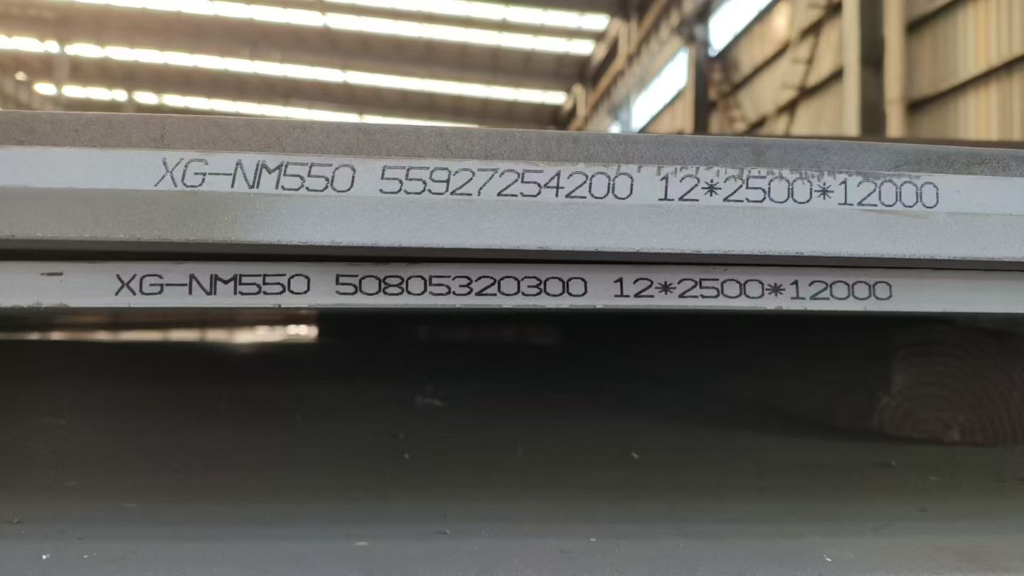
- NM550
- NM600
Higher numbers = higher hardness and better wear performance.
Sweden – SSAB Hardox Series
- Hardox 400
- Hardox 450
- Hardox 500 / 550 / 600
Widely recognized premium wear plates.
USA (AR Series)
- AR400
- AR450
- AR500
Used mainly in mining, lifting, shooting targets, and industrial equipment.
Europe (XAR / Dillidur / Raex)
- XAR 400 / 450 / 500
- Dillidur 400 / 450 / 500
- Raex 400 / 450 / 500
4. Key Properties of Wear-Resistant Steel
| Property | Description | |
| Hardness | Typically 360–600 HBW depending on grade | |
| Strength | High yield and tensile strength due to Q&T process | |
| Impact toughness | Withstands shock loading in heavy machinery | |
| Formability | Good bending and cutting performance for Q&T steel | |
| Weldability | Weldable with proper preheating and consumables | |
Hardness is the most important indicator of abrasive performance.
5. How to Choose the Wear-Resistant Steel
| Application Condition | Recommended Grades | Key Notes |
| Medium wear | NM400 / NM450 | Cost-effective, good workability |
| Heavy wear | NM500 | Higher hardness and stronger wear resistance |
| Extreme wear / high impact | NM550 / NM600 | Maximum lifespan for severe working conditions |
| Welding / bending required | NM400 / NM450 | Best processing performance |
| Long service life priority | NM500 / NM550 / NM600 | Reduces maintenance and downtime |
| Cost priority | NM400 / NM450 | Most economical choice |
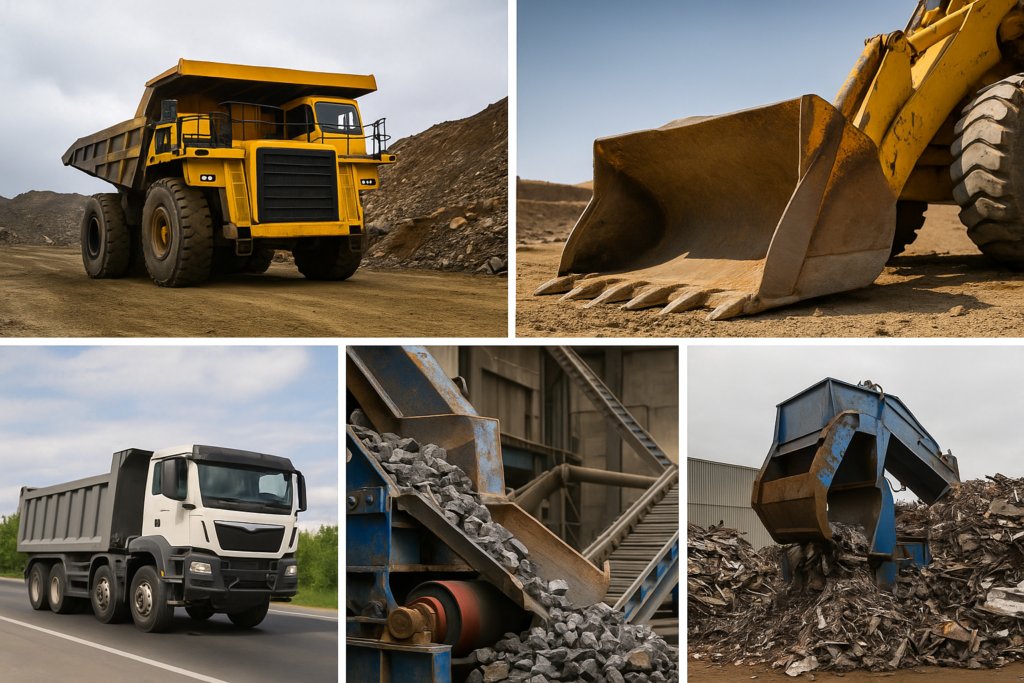
6. Applications of Wear-Resistant Steel
Wear-resistant steel is used wherever materials face heavy abrasion, friction, or impact.
1) Mining Industry
- Dump truck bodies
- Bucket liners
- Shovels & excavator parts
- Screens & chutes
- Hoppers
2) Construction Machinery
- Bulldozer blade edges
- Loader buckets
- Cement mixer drums
3) Industrial Equipment
- Crushers and grinding mills
- Conveyors & feeders
- Cutting edges and blades
4) Transportation
- Truck and trailer bodies
- Agricultural machinery wear parts
5) Recycling & Waste Handling
- Shredders
- Scrap processing equipment
Wear-resistant steel significantly extends service life and reduces downtime.
Conclusion
Wear-resistant steel is a critical material for heavy-duty industries that operate under constant abrasion and impact. Its combination of hardness, strength, and toughness makes it ideal for mining, construction, recycling, and industrial applications.
Understanding different grades and properties helps buyers choose the right plate for their equipment and reduce long-term maintenance costs.