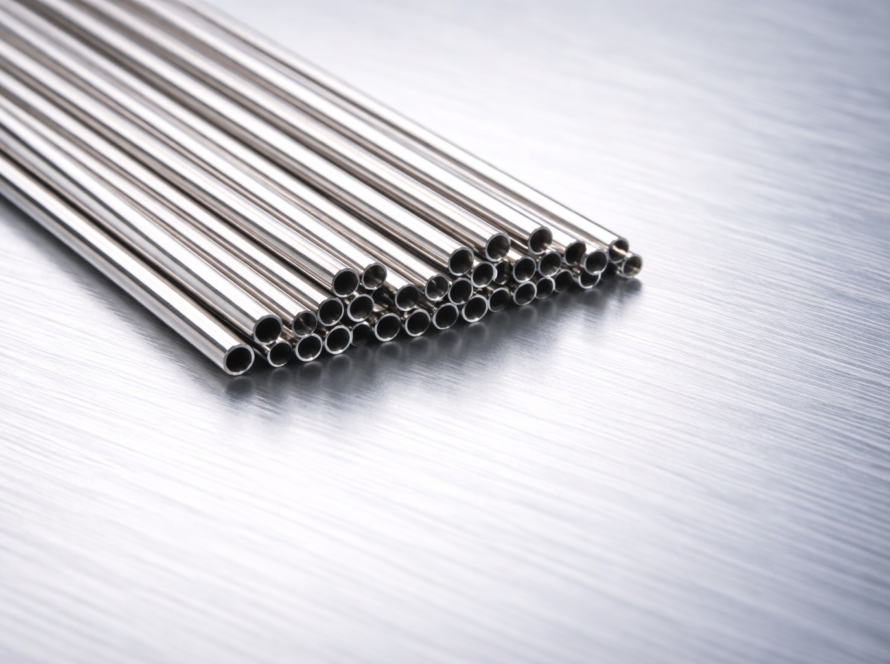
Duplex stainless steel has gained significant popularity in recent years due to its unique combination of high strength, corrosion resistance, and cost efficiency.
As industries face increasing demands for materials that can withstand harsh environments while maintaining durability and performance, duplex stainless steels have emerged as one of the most attractive choices.
This article explains what duplex stainless steel is, why its use is growing, and the industries driving its demand.
1. What Is Duplex Stainless Steel?
Duplex stainless steel is a family of stainless steels characterized by a dual-phase microstructure consisting of:
- Ferrite (≈ 50%)
- Austenite (≈ 50%)
This balanced structure provides duplex stainless steel with properties that outperform traditional 300-series austenitic steels (like 304 and 316) and 400-series ferritic steels.
Key advantages of duplex stainless steel:
- High mechanical strength
- Excellent corrosion resistance, especially stress corrosion cracking (SCC)
- Good weldability
- Lower nickel content → cost stability
- Suitable for aggressive environments
2. Why Duplex Stainless Steel Is Becoming More Popular
Growing demand is driven by performance, cost, and industry requirements. Below are the main reasons duplex stainless steel is gaining popularity worldwide.
1) Superior Strength Compared to Austenitic Stainless Steel
Duplex stainless steel has nearly twice the yield strength of 304 or 316 stainless steel.
Benefits:
- Reduced material thickness
- Lower structural weight
- Cost savings in fabrication
- Higher load-bearing capacity
This makes duplex an ideal choice for structural components.
2) Excellent Corrosion Resistance
Duplex stainless steels offer strong resistance to:
- Pitting corrosion
- Crevice corrosion
- Stress corrosion cracking (SCC)
- Chloride-rich environments
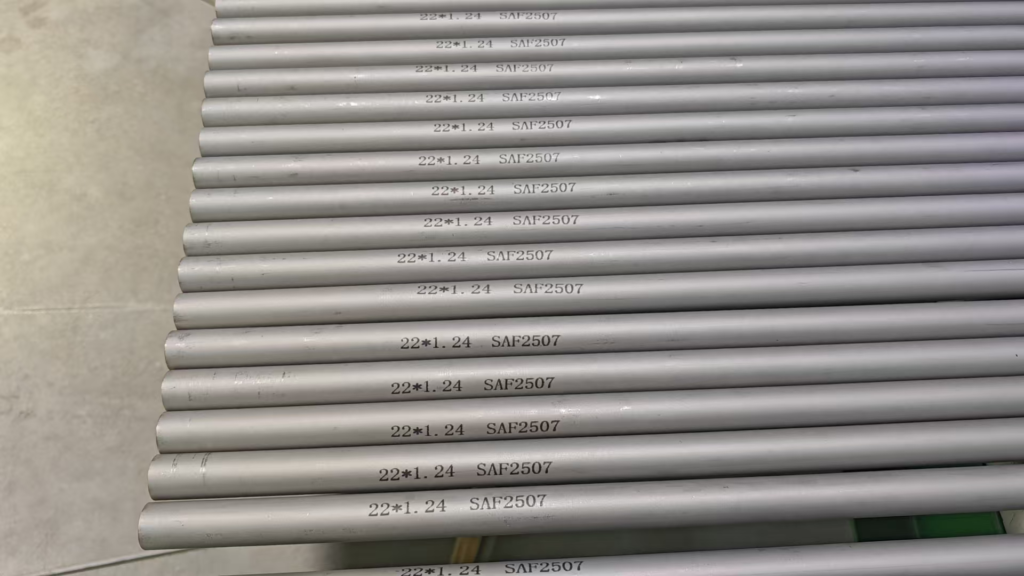
Grades like 2205 and 2507 are specifically engineered for marine, chemical, and offshore applications.
3) Better Stress Corrosion Cracking (SCC) Resistance
Austenitic stainless steels (like 304/316) are prone to SCC in:
- Hot chloride environments
- High-pressure chemical systems
- Marine atmospheres
Duplex stainless steel’s ferritic phase significantly enhances SCC resistance and ensures long-term reliability.
4) Cost Efficiency Compared to 300-Series Stainless Steel
Duplex contains:
- Lower nickel content (Ni)
- Higher chromium (Cr)
- Often includes molybdenum (Mo)
Because it uses less nickel, duplex stainless steel is less impacted by:
- Fluctuations in nickel prices
- Raw material cost volatility
This makes duplex a more stable and cost-effective option over time.
5) Increasing Industry Requirements for High-Performance Materials
Under rising pressure to use materials that last longer while reducing maintenance and replacement costs.
Duplex stainless steel meets these new performance demands.
3. Types of Duplex Stainless Steel
Duplex stainless steels are classified into four categories based on PREN and mechanical properties:
| Type | PREN Range | Example Grades |
| Lean Duplex | 22–28 | 2101, 2304 |
| Standard Duplex | 28–38 | 2205 |
| Super Duplex | 38–45 | 2507 |
| Hyper Duplex | 45+ | Zeron 100, 4501 |
Higher PREN → better pitting corrosion resistance.
4. Key Applications of Duplex Stainless Steel
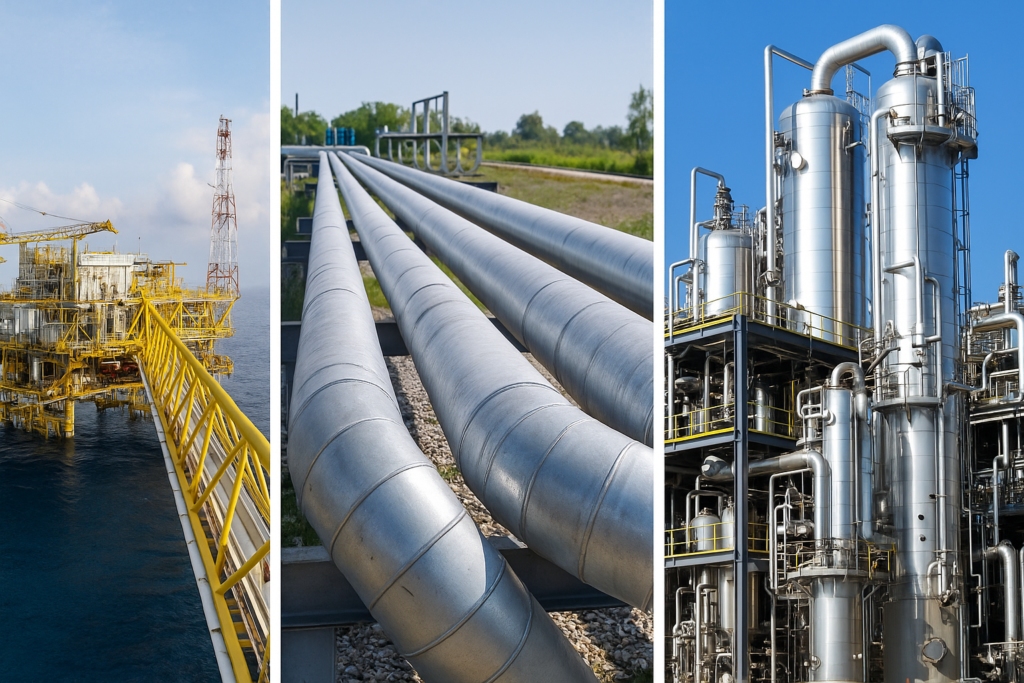
Duplex stainless steel is used in environments where corrosion, strength, and long-term reliability are critical.
Common applications include:
✔ Oil & Gas Industry
✔ Marine & Offshore Structures
✔ Chemical Processing
✔ Desalination Plants
✔ Structural & Construction
5. Advantages vs Other Stainless Steel Grades
| Feature | Duplex | Austenitic (304/316) | Ferritic (430) |
| Strength | Very High | Medium | Medium |
| SCC Resistance | Excellent | Poor | Good |
| Pitting Resistance | High | Medium | Low |
| Nickel Content | Low | High | Low |
| Cost Stability | Very Good | Poor | Good |
| Weldability | Good | Excellent | Moderate |
Duplex offers the best balance among strength, corrosion resistance, and cost.
6. Future Trend: Why Duplex Demand Will Continue to Grow
The global market is moving toward materials that deliver:
- Higher performance
- Longer service life
- Better corrosion protection
- Lower lifecycle cost
- Sustainability
Duplex stainless steel meets all these requirements — and its lower nickel content makes it more attractive as raw material prices fluctuate.
As more industries shift to energy efficiency and cost-optimized design, duplex stainless steel will continue expanding its market share.