AISI 301 stainless steel (UNS S30100 / SUS301) is a cold-work strengthened austenitic stainless steel widely used in precision stamping, spring manufacturing and lightweight structural components.
Thanks to its exceptional work-hardening capability, 301 stainless steel can achieve significantly higher strength than standard grades such as 304 while maintaining good formability in the annealed condition.
This guide provides a professional overview of chemical composition, mechanical properties by temper, comparison with 304 stainless steel, typical applications and procurement recommendations.
1. Chemical Composition and Key Characteristics of 301 Stainless Steel
| Element | Content |
|---|---|
| Carbon (C) | ≤ 0.15 |
| Silicon (Si) | ≤ 1.00 |
| Manganese (Mn) | ≤ 2.00 |
| Chromium (Cr) | 16.00 – 18.00 |
| Nickel (Ni) | 6.00 – 8.00 |
| Phosphorus (P) | ≤ 0.045 |
| Sulfur (S) | ≤ 0.030 |
Key Material Features:
- Outstanding cold work hardening capability
- High tensile strength achievable after cold rolling
- Good elasticity and fatigue resistance
- Good formability in annealed condition
- Moderate corrosion resistance (lower than 304 stainless steel)
- Cost-effective solution for strength-critical applications
2. Mechanical Properties and Temper Conditions
The engineering value of 301 stainless steel lies in its wide adjustable strength range.
By controlling cold reduction, mills can supply multiple temper conditions:
- Annealed (Soft / ANN)
- Half Hard (1/2H)
- Three-Quarter Hard (3/4H)
- Full Hard (FH)
- Extra Hard (EH)
During cold deformation, strain-induced martensite transformation occurs, dramatically increasing hardness and strength.
3. Mechanical Properties of 301 Stainless Steel by Temper
Applicable to: precision cold rolled strip, spring strip and thin sheet
Typical guaranteed values used in precision strip industry
| Temper | Hardness HV | Yield Strength MPa | Tensile Strength MPa | Elongation % |
|---|---|---|---|---|
| Annealed | ≤ 200 | ≥ 205 | ≥ 520 | ≥ 40 |
| 1/2 Hard | ≥ 310 | ≥ 510 | ≥ 930 | ≥ 10 |
| 3/4 Hard | ≥ 370 | ≥ 745 | ≥ 1130 | ≥ 5 |
| Full Hard | ≥ 430 | ≥ 1030 | ≥ 1320 | ≥ 3 |
| Extra Hard | ≥ 490 | ≥ 1275 | ≥ 1570 | — |
Engineering Insight:
- Tensile strength can increase up to 3 times from annealed to extra hard condition
- Formability decreases as hardness increases
- Elastic limit and fatigue performance improve significantly
4. Difference Between 301 and 304 Stainless Steel
| Property | 301 Stainless Steel | 304 Stainless Steel |
|---|---|---|
| Nickel Content | Lower | Higher |
| Work Hardening Rate | Very High | Moderate |
| Strength After Cold Work | Very High | Medium |
| Corrosion Resistance | Moderate | Better |
| Weldability | Fair | Excellent |
| Cost | Lower | Higher |
Material Selection Guidance:
- Choose 301 stainless steel for high strength, spring performance and weight reduction
- Choose 304 stainless steel for corrosion resistance, welding and general fabrication
5. Typical Applications of 301 Stainless Steel
1) Precision Springs and Electronic Stamping Parts
- Battery contact springs
- Connector terminals
- EMI shielding clips
- Precision stamped hardware
2) Industrial Structural Components
- Equipment housings
- Support brackets
- Conveyor system parts
3) Transportation and Lightweight Components
- Railway interior panels
- Automotive trim strips
- Shock-resistant spring components
6. Supply Forms and Procurement Recommendations
1) Common Supply Forms
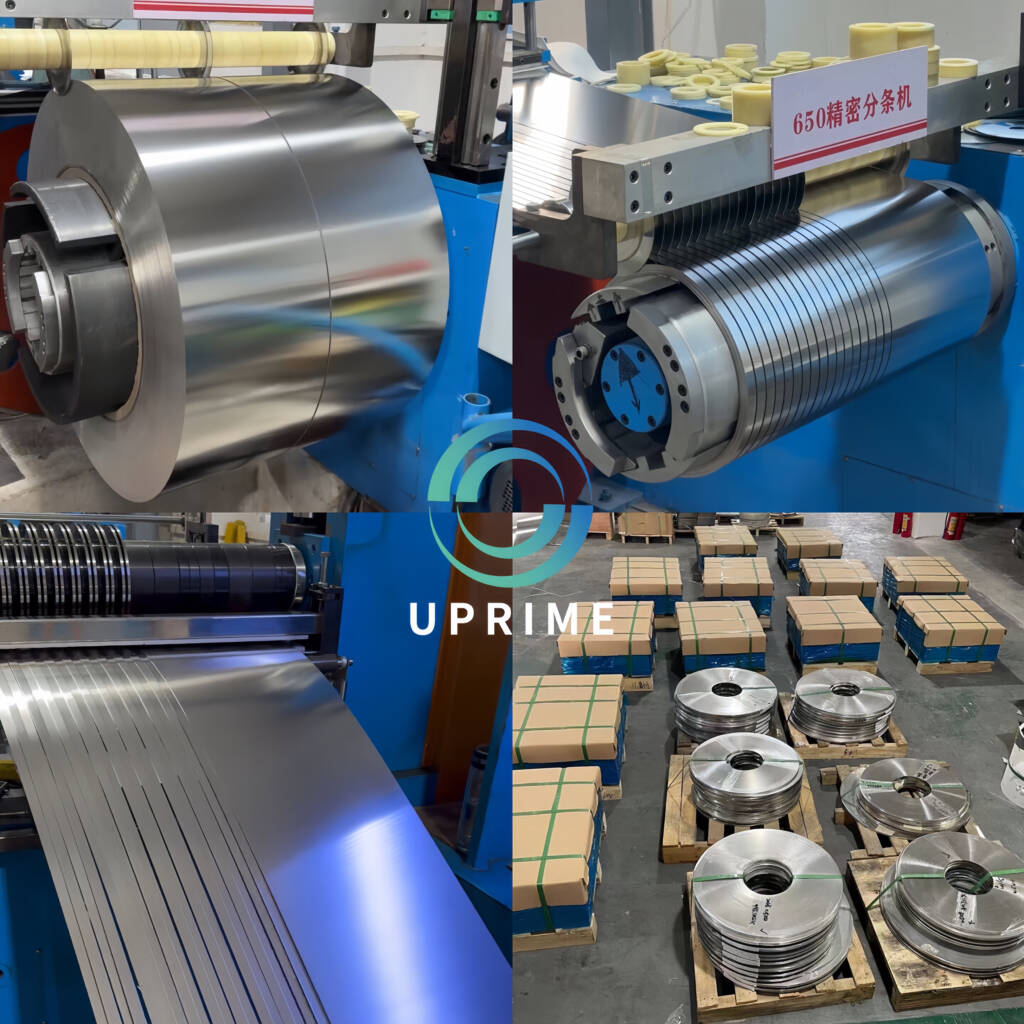
- Cold rolled coil
- Slit precision strip
- Cut-to-length sheet
- Spring temper strip
- Precision stamping blanks
2) Key Technical Points to Confirm When Buying
- Required temper condition
- Minimum tensile strength or hardness requirement
- Thickness tolerance class
- Surface finish (2B / BA / Bright)
- Edge condition (Slit Edge / Deburred Edge)
- Coil weight and inner diameter
- Stress relieving requirement
For electronic and spring manufacturers, property consistency and flatness control are critical factors.
Conclusion
AISI 301 stainless steel is a strength-driven engineering material capable of meeting diverse manufacturing requirements through controlled cold working.
From deep drawing applications in annealed condition to high strength elastic components in full hard temper, 301 provides an optimal balance between performance, weight reduction and cost efficiency.
It remains a preferred material for precision stamping, electronics manufacturing, automotive components and industrial fabrication.