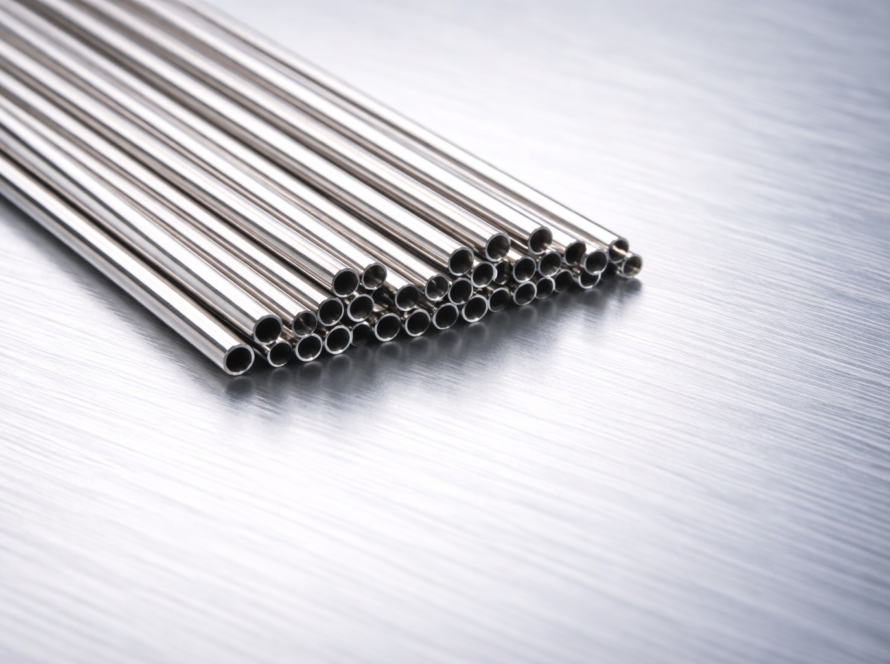
304 and 316L are two of the most widely used austenitic stainless steels.
While they look similar and share many characteristics, their corrosion resistance and application suitability can differ significantly.
This guide compares the chemical composition, mechanical properties, corrosion performance, price, and recommended applications to help you choose the right grade for your project.
1. Chemical Composition: 316L Contains Molybdenum for Superior Corrosion Resistance
The main difference is the addition of 2–3% molybdenum (Mo) in 316L and a lower carbon content (“L” = Low Carbon).
Molybdenum greatly enhances resistance to chlorides, salt, and chemical media.
Chemical Composition Comparison:
| Element | 304 (%) | 316L (%) | Function |
| Cr | 18.0–20.0 | 16.0–18.0 | Corrosion resistance |
| Ni | 8.0–10.5 | 10.0–14.0 | Stabilizes austenite |
| Mo | — | 2.0–3.0 | Improves pitting resistance |
| C | ≤0.08 | ≤0.03 | Better weldability |
| Others | Small amount | Small amount | Processing aid |
2. Corrosion Resistance: 316L Performs Better in Harsh Environments
316L significantly outperforms 304 in:
- Coastal and marine environments
- Salt spray exposure
- Areas with chlorides and cleaning agents
- Pharmaceutical and chemical processing
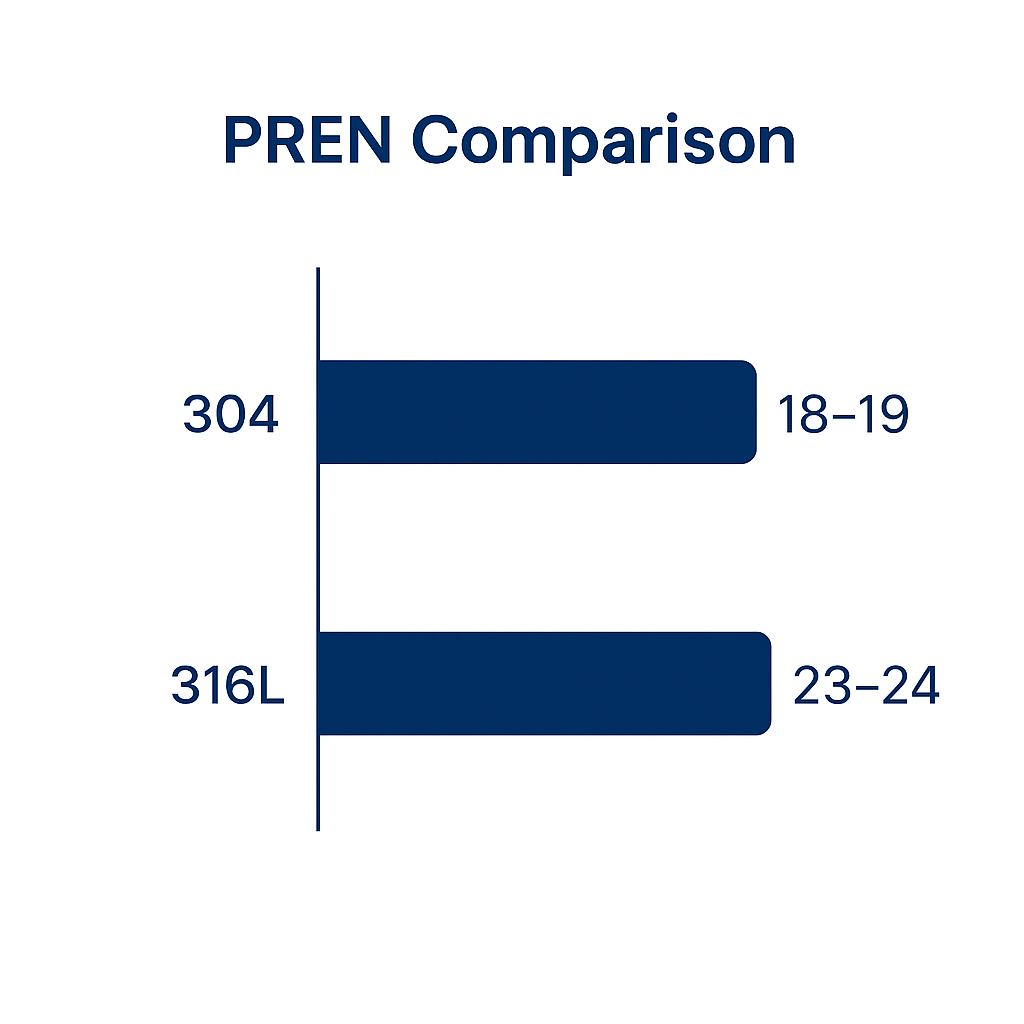
PREN (Pitting Resistance Equivalent Number):
- 304: 18–19
- 316L: 23–24 (much higher)
3. Mechanical Properties: Very Similar
| Property | 304 | 316L |
| Tensile Strength | ≥520 MPa | ≥480 MPa |
| Yield Strength | ≥205 MPa | ≥170 MPa |
| Elongation | ≥40% | ≥40% |
Both grades are suitable for forming, welding, cutting, and fabrication.
4. Price Difference
316L is generally 15–30% more expensive due to higher nickel content and the addition of molybdenum.
5. Applications: Where to Use Each
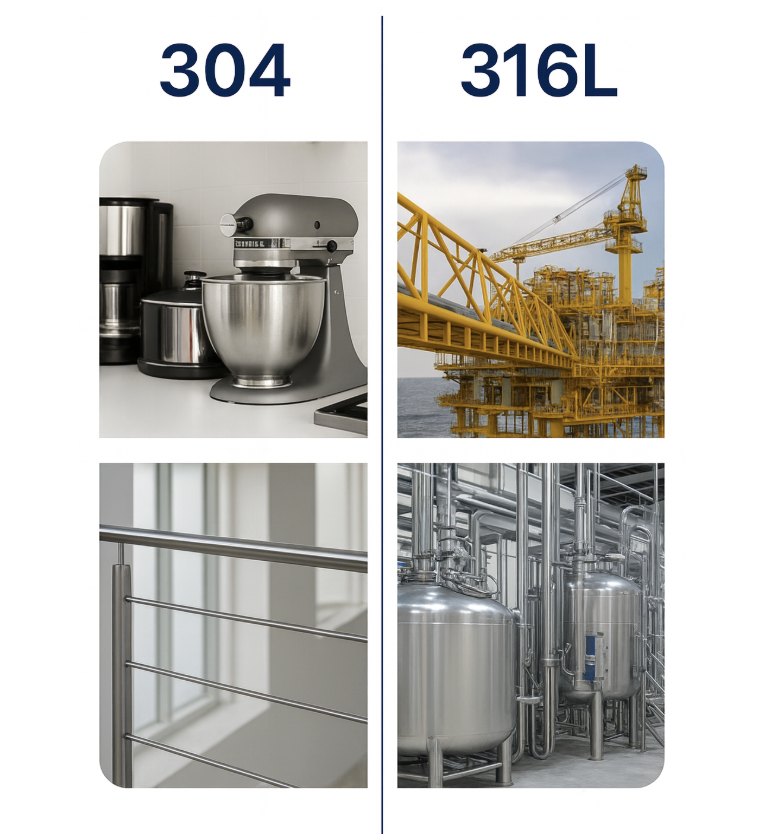
304 Applications:
- Kitchen equipment, household appliances
- Indoor architectural decoration
- Food processing equipment
- General industrial components
316L Applications:
- Marine and coastal environments
- Chemical and pharmaceutical equipment
- Medical devices
- Salt-rich or corrosive environments
- Shipbuilding and offshore engineering
6. How to Choose the Right Grade
Choose 316L if:
- The environment contains chlorides, salt, chemicals, or constant moisture
- The product will be welded and exposed to fluids
- Long service life is required
Choose 304 if:
- The environment is dry, indoor, or non-corrosive
- You want the best cost-performance ratio
Conclusion
- 304: Cost-effective, suitable for most general applications
- 316L: Superior corrosion resistance, ideal for harsh environments
- The key difference: Molybdenum + Low Carbon in 316L
- Choosing depends on environment → weldability → budget