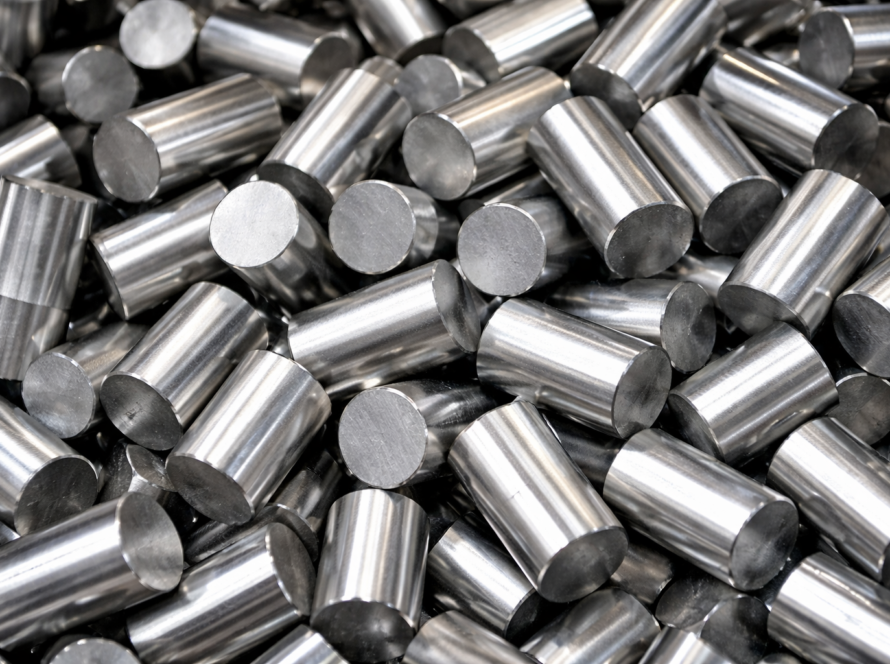
High strength steel (HSS) refers to steels that provide significantly higher yield strength and tensile strength compared to conventional carbon steels.
These materials are engineered to achieve high load-bearing capacity, excellent toughness, and reduced weight, making them widely used in construction, machinery, transportation, and heavy equipment manufacturing.
1. What Is High Strength Steel?
High strength steel generally includes:
- High Strength Low Alloy Steel (HSLA)
- Quenched and Tempered (Q&T) Steel
- Thermo-Mechanical Controlled Processed (TMCP) Steel
- Ultra-High Strength Steel (UHSS)
These steels are designed to deliver:
- Higher strength-to-weight ratios
- Good weldability
- Improved toughness
- Consistent mechanical performance
2. How High Strength Steel Is Produced
Different manufacturing technologies are used depending on the grade:
1) HSLA (High Strength Low Alloy)
- Controlled alloying with Mn, Nb, V, Ti
- Air-cooled or normalized
- Good weldability and formability
2) Q&T (Quenched & Tempered Steel)
- Heating → rapid quenching → tempering
- Achieves very high strength and toughness
- Used in cranes, heavy machinery, mining equipment
3) TMCP (Thermo-Mechanical Controlled Processing)
- Precise rolling + controlled cooling
- Produces fine-grain, high-toughness plates
- Ideal for bridges, offshore platforms, and load-bearing structures
3. Common Grades of High Strength Steel
1) China (GB/T Standards)
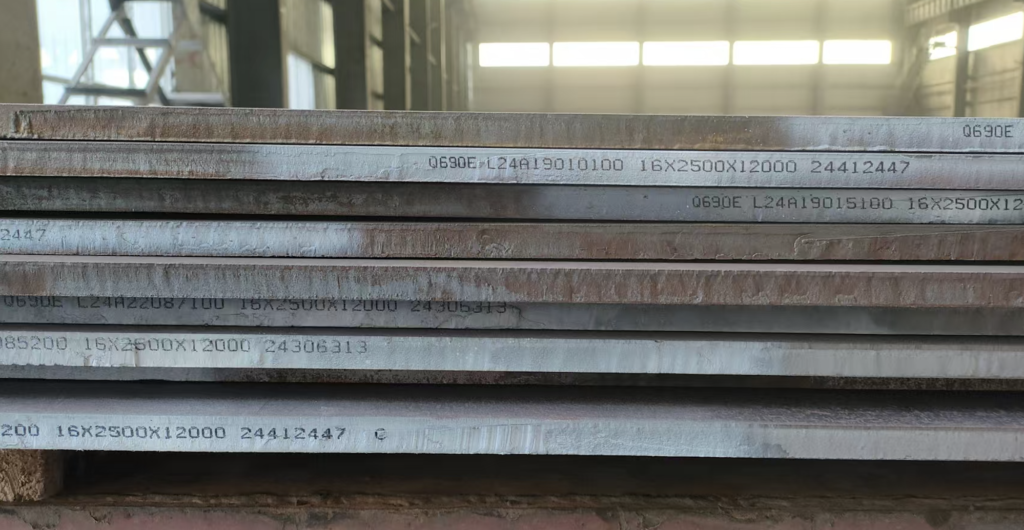
- Q420 / Q460 / Q550 / Q690 / Q890 / Q960
2) Europe (EN Standards)
- S355MC / S420MC / S500MC / S700MC (hot-rolled, high-performance)
- S690QL / S960QL (quenched & tempered structural steel)
3) International / General
- ASTM A514 / T1 Steel
- Domex / Strenx (SSAB)
Higher numbers = higher strength level.
4. Key Mechanical Properties
| Property | Description |
| Yield Strength | 420–1100 MPa depending on grade |
| Tensile Strength | High load-bearing performance |
| Toughness (Impact Resistance) | Maintains performance at low temperatures |
| Weldability | Generally good with proper procedures |
| Bendability / Formability | Varies by grade (TMCP > Q&T) |
High strength steel is designed to withstand:
- Heavy loads
- Dynamic stresses
- Harsh environments
5. Applications of High Strength Steel
1) Construction & Infrastructure
- Long-span bridges
- High-rise building structures
- Offshore platforms
2) Engineering Machinery
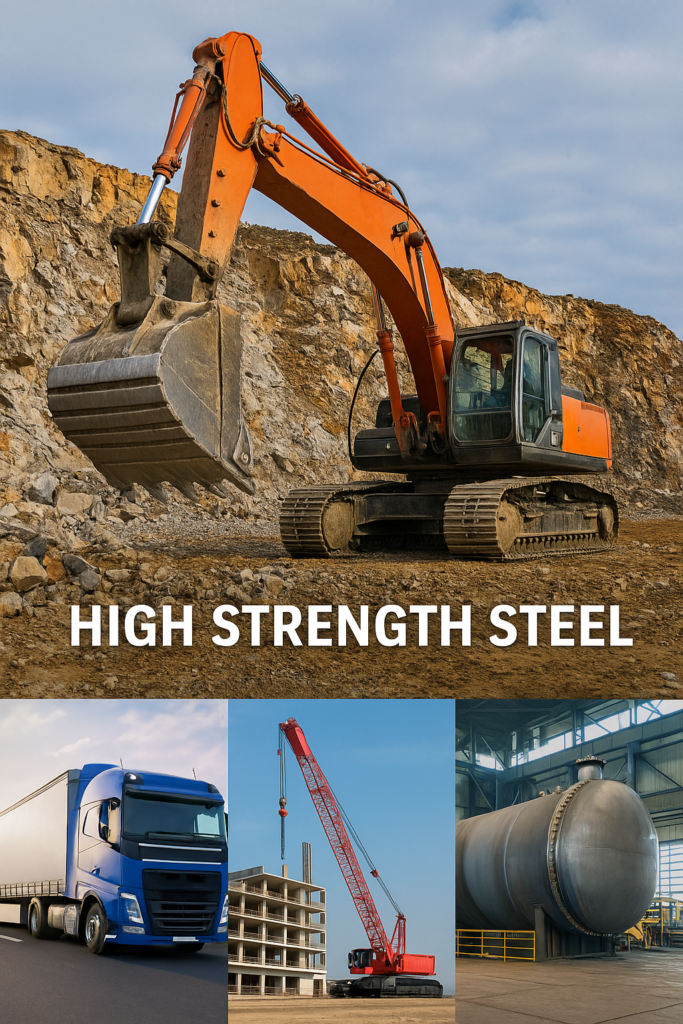
- Crane booms
- Excavator arms
- Loader frames
- Mining equipment
3) Transportation
- Truck chassis
- Trailer frames
- Shipbuilding components
4) Energy & Industrial Equipment
- Pressure vessels
- Wind tower sections
- Heavy-duty frames
6. How to Choose the Right High Strength Steel
Factors to consider:
- Required yield strength (e.g., Q690 vs S700MC)
- Weldability and heat input limits
- Forming requirements (bending, rolling)
- Weight reduction goals
- Environmental conditions (low temperature, corrosion)